Index head
Side nav buttons Fetch Help Downloads Web Publishing Testimonials Links Backstory T-shirts News New in Fetch 5 Security Fetch 5 Tour About Fetch Feedback Message Board FAQ Support Educational/Charitable Upgrade Check Orders Web Store Licensing Extras About Fetch Support Licensing Home Fetch Icon Fetch Help > FAQ > Troubleshooting FAQ

These are some common problems when using Fetch and what to do about them.

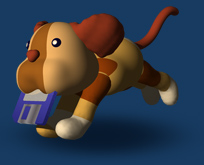
  1. Fetch connects, but the file list never appears and the Fetch dog runs and runs.
  2. The Fetch dog runs and runs but never connects.
  3. All of my file appears to transfer (the progress bar fills the entire circle), but at the end Fetch stalls and the transfer never finishes.
  4. The Stop button doesn't stop my file transfer.
  5. I uploaded an updated webpage but my browser still shows the old one.
  6. Why can't I choose my favorite application for editing files?
  7. Why can't I make downloaded files open in the correct application?
  8. Why can't I set Fetch as the default FTP or SFTP application?
  9. When I upload GIF or JPEG files in MacBinary format, my web browser can't display them.
  10. The file list does not include a file that I know was just put there.
  11. The filenames in the file list don't look right — there is size and date information in the name column, and the Get button doesn't work.
  12. After I upload my files, they do not have their correct names, instead the names are either gibberish (such as "ftpBYTlvT") or have ".1" after them.
  13. When I try to upload files, I get an error message from the server saying "STOU command not implemented" or "STOU: invalid number of parameters".
  14. Downloaded files have the wrong icon.
  15. The server says "Incorrect Password" but I know the password is correct.
  16. Why is uploading files slower than downloading files?
  17. How do I stop Fetch from expanding every Zip and StuffIt archive?
  18. How can I make Fetch to save the original Zip or StuffIt archives after expanding them?
  19. Get Info shows the permissions of a file or folder I just uploaded as blank or 000.
  20. When I try to open a connection, my computer freezes.
  21. When I transfer a file over my dial-up link, Fetch slows down and eventually drops the connection.
  22. When I tell Fetch to send the FTP command "ls", I get an error message about the command "LS"; why does Fetch capitalize the command?
  23. I can connect to a server on my local network, but not to Internet FTP or SFTP servers.
  24. I get the error "This is not a proper BinHex format file."
  25. I get the error "This is not a proper MacBinary III file."
  26. What are the ADAT and MACB commands I see in the Fetch Transcript window? My server does not recognize them.
  27. The server says "Invalid PORT Command" or "Can't build data connection. Connection refused."
  28. Since I installed Norton Personal Firewall 2.0 on Mac OS X some of the files I upload are empty on the server.
  29. When I try to get a file from an IBM MVS server, Fetch creates an empty folder.

1. Fetch connects, but the file list never appears and the Fetch dog runs and runs.

Toggle the setting of the Use passive mode transfers (PASV) checkbox in the General Preferences pane, and try connecting again. If you've unchecked Use passive mode transfers (PASV) checkbox, try disabling the OS X firewall in the Sharing pane of System Preferences, if it is enabled. On Mac OS X 10.5 and later, you can configure the firewall to allow an exception for Fetch. For more information about Fetch, firewalls, and active vs. passive FTP, see the active and passive FTP topic.

2. The Fetch dog runs and runs but never connects.

Usually this means that the server you are trying to connect to is not currently operating. Another possibility is that there is a firewall or network outage somewhere between your computer and the server. If the problem persists, confirm that you are connecting to the right hostname, and check with your network administrator about firewalls. You can use the ping and traceroute functions of the Network Utility application (which you can find by going to your Applications folder, and then the Utilities folder) to check the network route between your computer and the server.

3. All of my file appears to transfer (the progress bar fills the entire circle), but at the end Fetch stalls and the transfer never finishes.

The most common cause of this is that you are behind a NAT device and the transfer has really finished, but the NAT device has blocked the information telling Fetch that it's done. Your transfer is done, just click the Stop button to clear the progress indicator.

Another possibility is that the server is running Windows NT 4 Service Pack 6; there is a known problem with the tcpip.sys file of that release and Mac clients (for more information see this article). If that is the case, one workaround is to replace the tcpip.sys file on the server with the one from Service Pack 5.

If that is not the problem our recommendations are to: 1) Make sure the Use passive mode transfers (PASV) checkbox in the General Preferences pane is checked; 2) Try a different FTP client (such as Interarchy, Transmit, or Vicomsoft FTP Client) to check whether the problem is specific to Fetch or more general; 3) Contact the server administrator or network administrator, and see if they can reproduce the problem under similar conditions.

4. The Stop button doesn't stop my file transfer.

Some servers do not respond to the Stop command. In these cases, you can cancel a transfer by closing the connection altogether by closing the transfer window.

5. I uploaded an updated webpage but my browser still shows the old one.

One possibility is that the web browser is showing you a cached copy of the page instead of the one that is currently on the server. To tell the browser to get a fresh copy of the page, click the Reload (or Refresh) button with the Option key pressed. In Safari, you should also try the Empty Cache command in the Safari menu.

If that does not resolve the problem, it could be that you uploaded the new page to a different folder from the one holding the old file. Most servers require that your webpage files go in a specific folder. You should double-check what your server requires, and try re-uploading the files to the correct location.

6. Why can't I choose my favorite application for editing files?

There are two reasons an application may not be listed as a choice for editing files in the Transfer Options section of the info window or the Obscure Preferences pane, or that the Edit the file option may not appear at all in the Transfer Options.

The first is that the application does not support the Fetch Edit command.

Fetch makes a distinction between editing and opening a file in another application. When you edit a file with Fetch, Fetch opens the file in the selected application so you can make changes to it, and then when you save the file in the application, it saves your changes back to the server instead of to your local hard drive.

Only certain applications support saving files back to the server via Fetch, so Fetch only lists those applications as choices for editing applications. Unfortunately, several popular applications for editing webpage files, such as Photoshop, Dreamweaver, GoLive, and TextEdit do not support saving the files back to the server via the Fetch Edit command, so Fetch does not list them as choices in the Edit files like this with menu.

Currently, the text editors that support automatically saving changes back to the server are: BBEdit, TextWrangler, Smultron, SubEthaEdit, TextMate, CSSEdit, Page Spinner, skEdit, Tag, Tex-Edit Plus, AlphaX, Jedit X, mi, Pepper, and Style. The only image editing application that supports the Fetch Edit command is GraphicConverter. You must have one or more of these programs installed to edit text or image files. See the Edit command help topic for more information.

However, you can tell Fetch to open any kind of file in any other application when you download it or double-click on it in Fetch. The difference is that any changes will be saved locally. See the opening files automatically after downloading help topic for more information on how to do this.

If you do have at least one of these supported text editors installed, and Fetch is not listing it in the Edit files like this with pop-up menu in the info window or the editor pop-up menus in the Obscure Preferences pane, or you choose one and Fetch does not remember your choice, you may be being affected by a problem in Mac OS X. Follow the instructions in the fixing problems choosing editors and helper applications help topic to fix this problem.

7. Why can't I make downloaded files open in the correct application?

First, make sure you have followed the instructions for setting which application opens the desired kind of file in the changing the application a file opens with help topic.

However, if the application you want to use to open a kind of file is not listed even though it is installed, or you choose it and Fetch does not remember your choice, or you choose one application and the files still open in a different application, you may be being affected by a problem in Mac OS X. Follow the instructions in the fixing problems choosing editors and helper applications help topic to fix this problem.

8. Why can't I set Fetch as the default FTP or SFTP application?

If Fetch (or another FTP application) is not listed as a choice for the default FTP or SFTP helper application in the General Preferences pane, or if you choose an application and Fetch does not remember your choice, you may be being affected by a problem in Mac OS X. Follow the instructions in the fixing problems choosing editors and helper applications help topic to fix this problem.

9. When I upload GIF or JPEG files in MacBinary format, my web browser can't display them.

Web browsers (and many other programs) do not expect to find files encoded in a format like MacBinary; they expect to find the raw data. Use the Automatic or Binary (Raw Data) format for uploading web graphics and other cross-platform files.

10. The file list does not include a file that I know was just put there.

Choose the Refresh command in the View menu; that will usually fix this problem. Fetch reuses file lists when they have not changed in a long while, which makes loading them quicker but also makes it possible to miss new changes.

11. The filenames in the file list don't look right — there is size and date information in the name column, and the Get button doesn't work.

Fetch sometimes guesses what kind of computer it is talking to, and it can guess incorrectly. Choosing the Refresh command in the View menu will usually redraw the file list with the correct information. Otherwise, if you know the name of the file, you can hold down the Shift key and click the Get button and type in the file's name. If refreshing does not fix the problem, please send a transcript to Fetch Softworks so we can fix the problem in future versions of Fetch.

12. After I upload my files, they do not have their correct names, instead the names are either gibberish (such as "ftpBYTlvT") or have ".1" after them.

When you use the Put command, do not set the "If a file already exists:" menu to Pick a different name in the Put dialog. Instead, set it to Replace existing file .

When this menu is set to Pick a different name, Fetch asks the server to pick a new name for your files if ones with the same name already exist, so that your existing files are not replaced. Unfortunately, some servers pick names that have little relation to the file's original name.

13. When I try to upload files, I get an error message from the server saying "STOU command not implemented" or "STOU: invalid number of parameters".

When you use the Put command, do not set the "If a file already exists:" menu to Pick a different name in the Put dialog. Instead, set it to Replace existing file .

When this menu is set to Pick a different name, Fetch sends the "STOU" command to the server (asking the server to give your file a unique name to make sure it does not replace an existing file). Some servers do not support the "STOU" command, and give this error as a result.

14. Downloaded files have the wrong icon.

If a certain kind of downloaded file does not have the icon you expect after downloading, try changing the application that kind of file is set to open with in the Transfer Options section of the info window. See the changing the application a file opens with help topic for step-by-step instructions.

15. The server says "Incorrect Password" but I know the password is correct.

Although the error message only mentions the password, this can also mean that the hostname or username that you entered is incorrect; double-check what you entered in the New Connection dialog. If you use a proxy server that requires a password it is also possible that the hostname, username or password that you are sending to the proxy server is incorrect; see the Proxy Preferences pane.

16. Why is uploading files slower than downloading files?

Usually this is normal, because most high-speed Internet connections, including cable modems and DSL, are asymmetric — they are designed to provide much better speed for downloading than uploading. For more information, see the Why is uploading slower than downloading? help topic.

17. How do I stop Fetch from expanding every Zip or StuffIt archive?

Normally Fetch automatically expands Zip and StuffIt archives and other encoded or compressed files after downloading them. To stop Fetch from expanding or decompressing all files, uncheck the Allow automatic decoding of downloaded files checkbox in the Download Preferences pane.

You can also tell Fetch to stop automatically expanding just certain kinds of files. For example, if you want to stop Zip files from being expanded: Connect to your server, select a file whose name ends in ".zip", choose Remote > Get Info, and uncheck the Automatically decode files like this checkbox in the Transfer Options pane of the info window. To stop decoding of StuffIt archives, select a file whose name ends in ".sit" and follow the same steps. For more information, see the decoding files automatically help topic.

18. How can I make Fetch save the original Zip or StuffIt archives after expanding them?

Normally Fetch deletes the original Zip and StuffIt archives (and other compressed files) after downloading and expanding them. To stop Fetch from expanding or decompressing all files, and thus keep all the original archives, uncheck the Allow automatic decoding of downloaded files checkbox in the Download Preferences pane.

You can also prevent this from happening, and keep the original archives, for just certain kinds of files. For example, if you want to stop Zip or StuffIt archives from being expanded and deleted: Connect to your server, select a file whose name ends in ".zip" (for Zip archives) or ".sit" or ".sitx" (for Stuffit archives), and choose Remote > Get Info. In the Transfer Options pane of the info window, select the Save and open the file button in the "After transferring a file like this" section, uncheck the Automatically decode files like this checkbox, and choose StuffIt Expander from the Open files like this with menu if it's not already chosen. Now when you download a Zip or StuffIt archive, instead of Fetch expanding the file itself, it passes the file off to StuffIt Expander for expansion. Normally StuffIt Expander does not delete the file after expanding it. For more information, see the saving original archives files after expanding them help topic.

19. Get Info shows the permissions of a file or folder I just uploaded as blank or 000.

For just uploaded items on FTP connections, or newly created folders and files, Fetch may show all the permissions checkboxes as unchecked (a UNIX equivalent of "000") and the owner and group as "unknown". This is not the true state of the permissions. To see the true permissions, you must click the Refresh button in the transfer window, and Get Info on the items again. On SFTP connections, you will see the correct permissions immediately, but you must refresh to see the true owner and group.

20. When I try to open a connection, my computer freezes.

If you're using a dial-up connection, check the configuration of the PPP section of the Network pane of System Preferences, and consult with the administrators of the dial-up service you are using. This sort of problem is usually caused by misconfiguration of the dial-up software.

21. When I transfer a file over my dial-up link, Fetch slows down and eventually drops the connection.

If you're using a dial-up connection, check the configuration of the PPP section of the Network pane of System Preferences, and consult with the administrators of the dial-up service you are using. This sort of problem is usually caused by misconfiguration of the dial-up software.

22. When I tell Fetch to send the FTP command "ls", I get an error message about the command "LS"; why does Fetch capitalize the command?

Fetch does not capitalize the command, the server does. In fact, capitalization of FTP commands does not matter. The problem is that "ls" is not an FTP command; it is a command used in many command-line FTP clients, such as the standard UNIX client, but it is not a part of the FTP protocol. The correct corresponding FTP command is "NLST". Similarly, "dir", "get", "put", and "cd" are not FTP commands; the proper commands are "LIST", "RETR", "STOR", and "CWD", respectively.

23. I can connect to a server on my local network, but not to Internet FTP or SFTP servers.

Check with your network or firewall administrator to see if you need to use a SOCKS gateway or proxy server to access Internet FTP or SFTP servers. If so, you can configure Fetch to work with the proxy server using the Proxy Preferences pane.

24. I get the error "This is not a proper BinHex format file."

This means that Fetch could not successfully decode the file. Select the file in the transfer window, choose Remote > Get Info, and in the Transfer Options pane of the info window, uncheck Automatically decode files like this, and download the file again. Then try to decode the file with StuffIt Expander (which may be in your /Applications/Utilities folder; if not, you can download it for free). You should recheck Automatically decode files like this in Transfer Options for BinHex files afterwards.

25. I get the error "This is not a proper MacBinary III file."

This error, and a similar one about AppleSingle format files, means that the file has been corrupted in some way. First, try downloading again in Binary mode by choosing Remote > Mode > Binary. Next, contact the source of the file to get a new copy. If the file was created by Fetch, send a report to support@fetchsoftworks.com so we can investigate.

26. What are the ADAT and MACB commands I see in the Fetch Transcript window? My server does not recognize them.

Fetch sends the ADAT command to find out if the server supports Kerberos security. That way it can warn you if you aren't taking advantage of security options supported by the server.

Fetch sends the MACB command to find out if the server can interpret and generate MacBinary format. Older Mac FTP servers can, and taking advantage of that capability makes transfers more reliable.

FTP servers are supposed to return an error code if they get a command they don't support, so sending these commands should be harmless. But some servers, particularly proxy servers, are touchier than they should be and erroneously drop the connection when they get an unfamiliar command. If your server is one of these, the Obscure Preferences pane has checkboxes to tell Fetch to not send these commands.

27. The server says "Invalid PORT Command" or "Can't build data connection. Connection refused."

These problems can usually be resolved by checking the Use passive mode transfers (PASV) checkbox in the General Preferences pane. See the active and passive FTP topic for more information about this checkbox.

28. Since I installed Norton Personal Firewall 2.0 on Mac OS X some of the files I upload are empty on the server.

Some users have reported problems uploading files after installing Norton Personal Firewall or Norton Internet Security on Mac OS X: the files are created on the server, but are empty. Symantec discusses the problem on this webpage. Users in this situation are advised to upgrade to version 3.0 of Norton Personal Firewall or Norton Internet Security. If that does not solve the problem, try unchecking the Use passive mode transfers (PASV) checkbox in the General Preferences pane. If that also does not help please contact support@fetchsoftworks.com.

29. When I try to get a file from an IBM MVS server, Fetch creates an empty folder.

This is due to a problem with the server (and affects some other servers besides IBMs). The workaround is to check the Treat mystery items as files checkbox in the Miscellaneous Preferences pane .